There's
not 1 universal tip that will always identify a snake
correctly, so please just give every wild snake you
see space and message us for a quick, FREE ID.
Unfortunately, what most
people have learned about snakes simply isn't true.
This misinformation and the myths that often accompany
them often get harmless snakes killed. Through our social
media and in person shows, we bust these myths with
truth, logic and visual aides such as these.
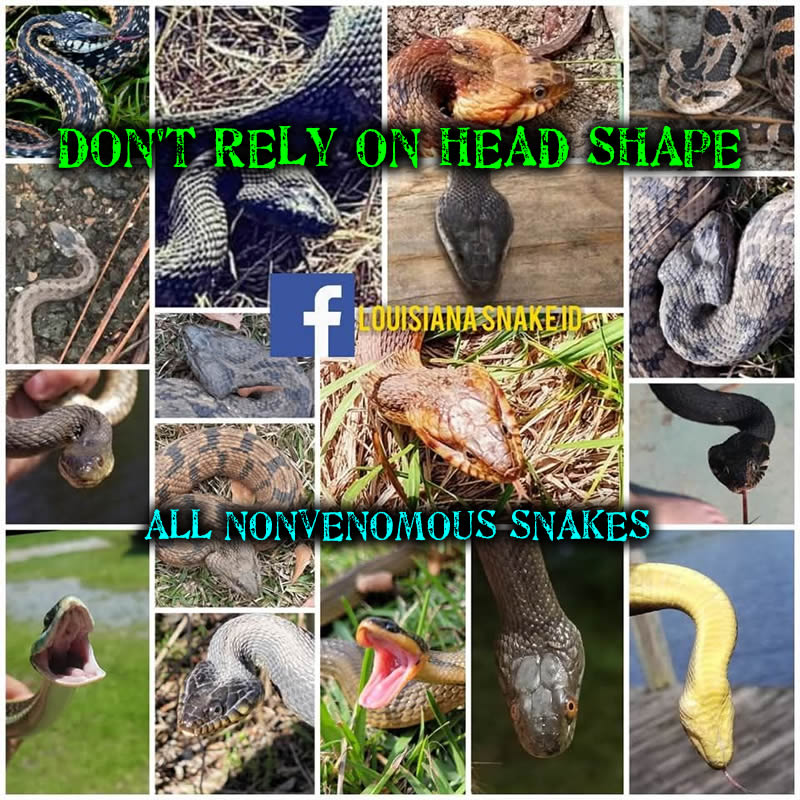
Myth: Triangle/diamond
shaped head = venomous.
TRUTH: Snakes flatten their heads when scared,
which makes head shape unreliable when trying to determine
if a snake is venomous or not. ALL
of these snakes in the collage below are nonvenomous
snakes displaying their natural shaped heads or heads
that have been flattened out to try to scare away a
large predator, US.
Myth: If
the snake has "cat eye" pupils, it's venomous.
TRUTH: While pit vipers in the United States
do have eliptical pupils, pupil shape IS NOT reliable
for a few reasons.
1. Pupils are entirely
too small, to be able to see them clearly, a person
would have to get too close to the snake in question.
2. Pupils dilate in low light so eliptical
pupils will often look round.
3. Many nonvenomous have eliptical pupils; coral snakes
& numerous other highly venomous snakes have round
pupils.
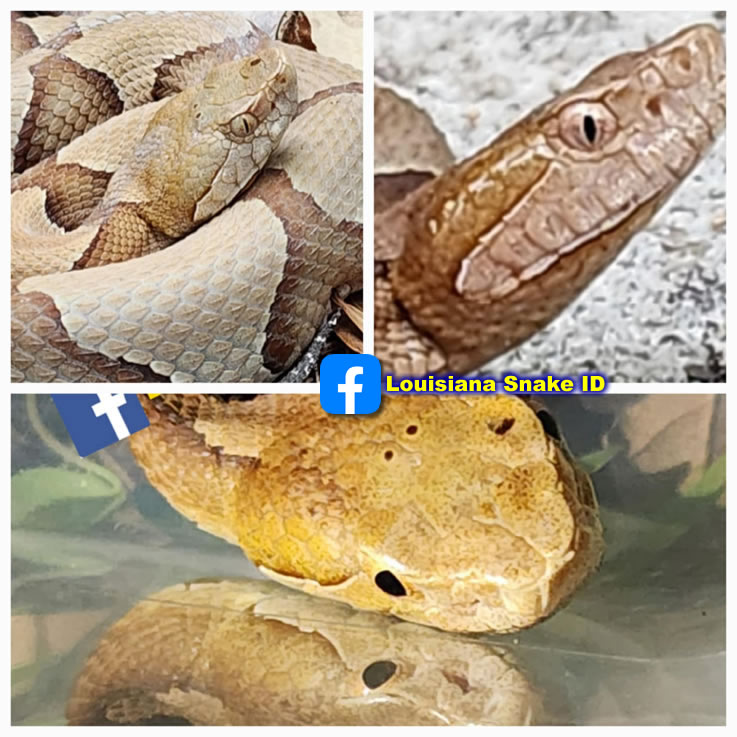
This collage shows the pupils of 3 venomous eastern
copperheads (Agkistrodon contortrix) in 3 types of light,
notice how round the pupils look in the last photo.
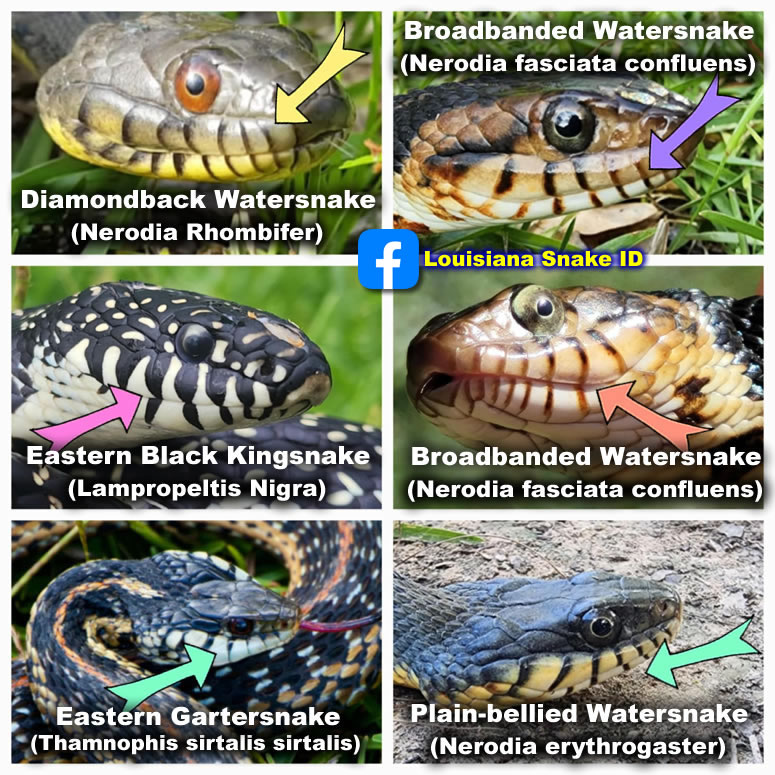
TIP: Look for
dark vertical lines along the side of the mouth of a
snake, in the US this means a snake is nonvenomous.
This collage shows the
dark lines that can been seen from a safe distance.
Myth: Baby
venomous snakes are more dangerous than adults because
they can't control their venom and will dump all of
their venom when they bite.
TRUTH: Baby venomous snakes are fully capable
of controlling their venom output from birth (even capable
of delivering dry bites), have only a fraction of the
venom of adults and even if they did "dump"
their venom you'd receive only a tiny amount of venom.
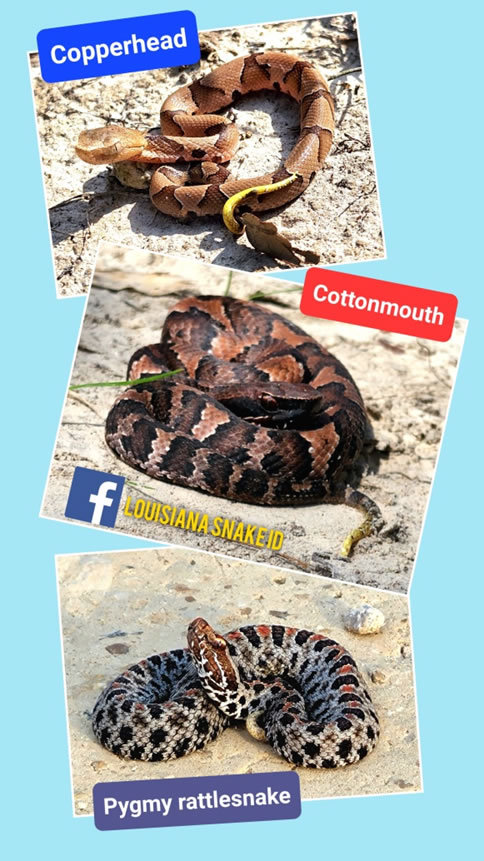
Many baby pitvipers in
the US are born with bright greenish/yellow tips on
the end of their tails that they use as caudial lures
to catch prey but they also serve a great visual indicator
for us. Most people believe that only copperhead babies
have these bright tails, but as you can see here, they
aren't the only ones.
|